
The Pinnacles Desert is a striking family day, but the open landscape changes how you plan. It is in Nambung National Park, well beyond a quick Perth playground outing. Allow for driving, toilets, heat and a child's patience with exposed walking.
| Need to know | Practical answer |
|---|---|
| Admission | Nambung National Park entry fee applies |
| Useful first stop | Pinnacles Desert Discovery Centre |
| Walking | First 300 m of Desert View is a Class 1 accessible path; beyond it is a sandy Class 3 trail |
| Driving | Marked desert loop and parking bays; stay on the route |
| Pets | Dogs are not permitted in the national park |

Keep the walking modest
The Pinnacles Desert Discovery Centre provides interpretation and facilities before the walk. The Desert View route starts with a 300 m Class 1 accessible section. The remainder includes a longer sandy section rated Class 3, so the entire walk is not an accessible path. Choose the short section if that fits the child or a mobility aid, and turn back before heat or sand becomes a problem.
The marked drive through the desert is another way to see the formations, with designated stopping places. Keep children beside you near vehicles and follow all signage around the fragile limestone pillars. The park information covers entry conditions and the no-dogs rule. Do not climb on formations for photographs.
Make the long trip workable
Set off with water, hats and food, and check the day's forecast and national-park notices. The site is exposed; there may be little shade on the walk. Use the discovery centre toilets before exploring. Avoid inventing a fixed drive time: traffic, stops and the starting suburb vary. If the child would rather explore nearby water later, make it a separate stop only after checking conditions and travel time.
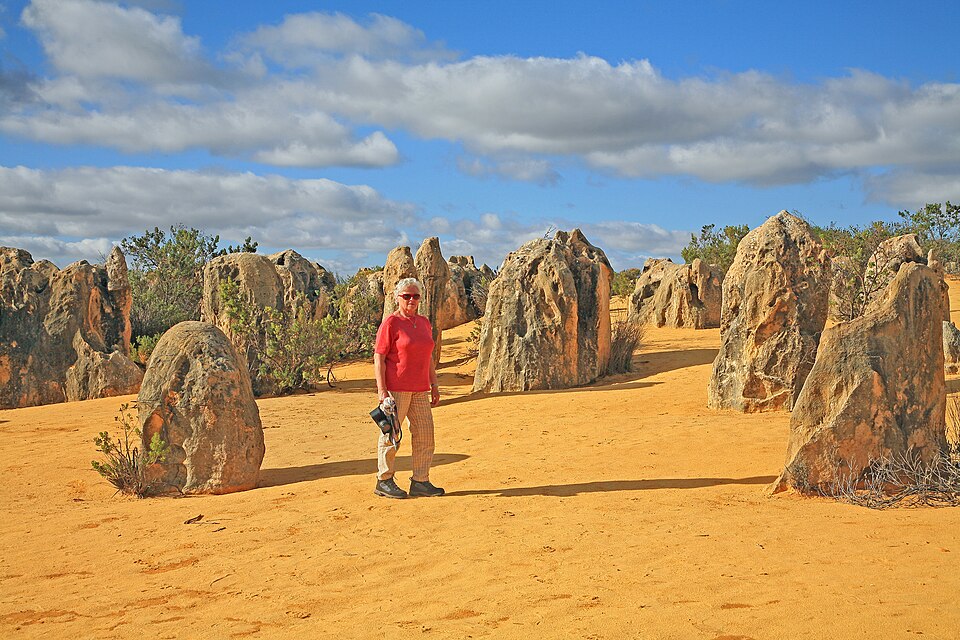
This is a bigger commitment than a Perth Hills day trip or a free park outing. The photograph shows the actual Pinnacles landscape; it does not indicate current track or weather conditions.
If travelling with a pram
Plan around the discovery centre and the first accessible section of the route. A pram suitable for paved paths is not automatically suitable for the later sand. The drive gives another way to experience the landscape without completing the trail, although getting out still needs care near moving cars. Use the DBCA route description to decide how far to go before leaving the centre.