
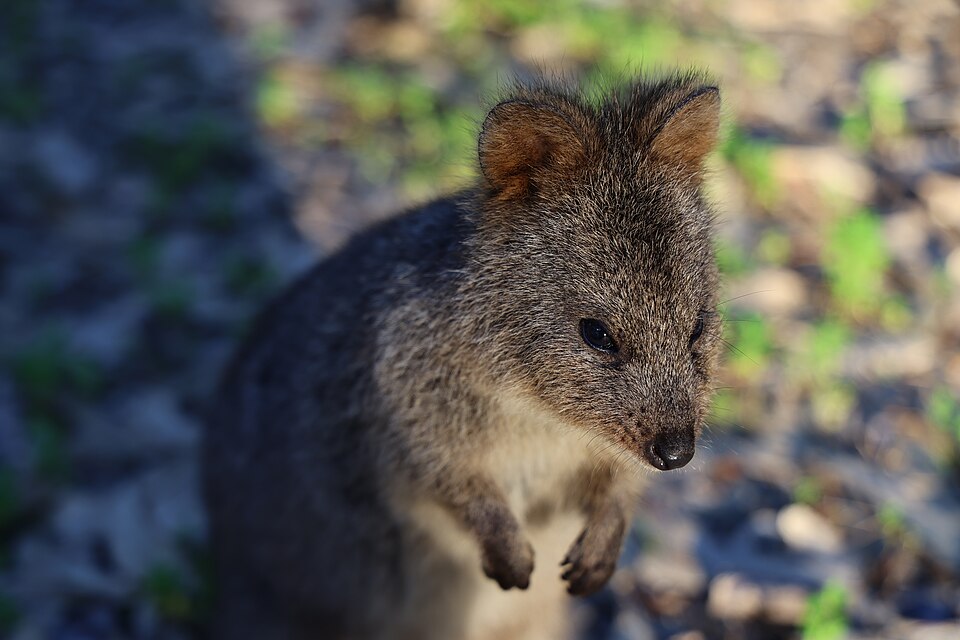
Quokkas live wild on Wadjemup / Rottnest Island, and watching one forage can be the quiet highlight of a visit. They are not pets or performers. You may see them around the main settlement, or further along an island walk or ride. Give yourself time for the whole island rather than trying to arrange a close-up “quokka selfie.”
| Plan the visit | What matters |
|---|---|
| Getting there | Book a ferry or another authorised arrival; check the return |
| Finding quokkas | Look quietly around the settlement and vegetated areas |
| Taking photos | Keep your distance; never lure an animal with food |

Look first, then slow down
The island authority’s spotting guide suggests looking around the settlement as well as more vegetated routes. Animals may shelter from heat or be less active when you pass. That is normal. A patient watch from a path works better than following a quokka into undergrowth. Leave the paths and resting places to the animals, especially if you see a mother with a joey.
The same guide advises visitors to move back if a quokka comes within two metres. Hold your camera where you are and let the animal decide where to go. A long lens or a wider photo showing the surroundings makes more sense than putting a face close to an animal. Keep bags and food closed, and make sure children understand the rule before they see their first quokka.
Food and touch are off limits
Rottnest Island Authority says visitors must not touch or feed quokkas or other island wildlife. Human food can harm them, and handling can spread disease. Do not offer water or a snack to hold one still for a photo. If an animal approaches your picnic, secure the food and step away without trying to pick it up.
Treat a quokka sighting as one part of the day. Rottnest also has beaches, paths and cultural history; allow enough time for your chosen transport and ferry return. Check the authority’s practical travel advice before departure. If a child would rather spend time by the water than wait for an animal, switch plans without chasing a better sighting. Our wildlife with kids guide compares other options.