Updated 9:30 AM AWSTFull Perth forecastWeather source: Bureau of Meteorology. Check official forecast before travel.Source: BoM. Check forecast.
Beaches
Snorkelling in Perth
This page links to Perth beach pages where snorkelling may be relevant. Do not treat it as safety advice; check current conditions, local signs and beach safety information before entering the water.
Last fact-checked: 2026-09-26
Perth has rewarding snorkelling close to shore, but the right spot depends on the day. A sheltered reef pool, an underwater shipwreck and an island trail are three different swims. Check the wind, swell and your own comfort in open water before choosing one. No list of “best spots” can tell you what the sea will look like when you arrive.
Snorkelling in Perth visitor information
Choose a place
What makes it different
Mettam’s Pool
A reef-sheltered shore entry in Marmion Marine Park
Omeo Wreck, North Coogee
A marked maritime trail beginning near a historic wreck
Wadjemup / Rottnest Island
Several bays and a signed trail; ferry travel required
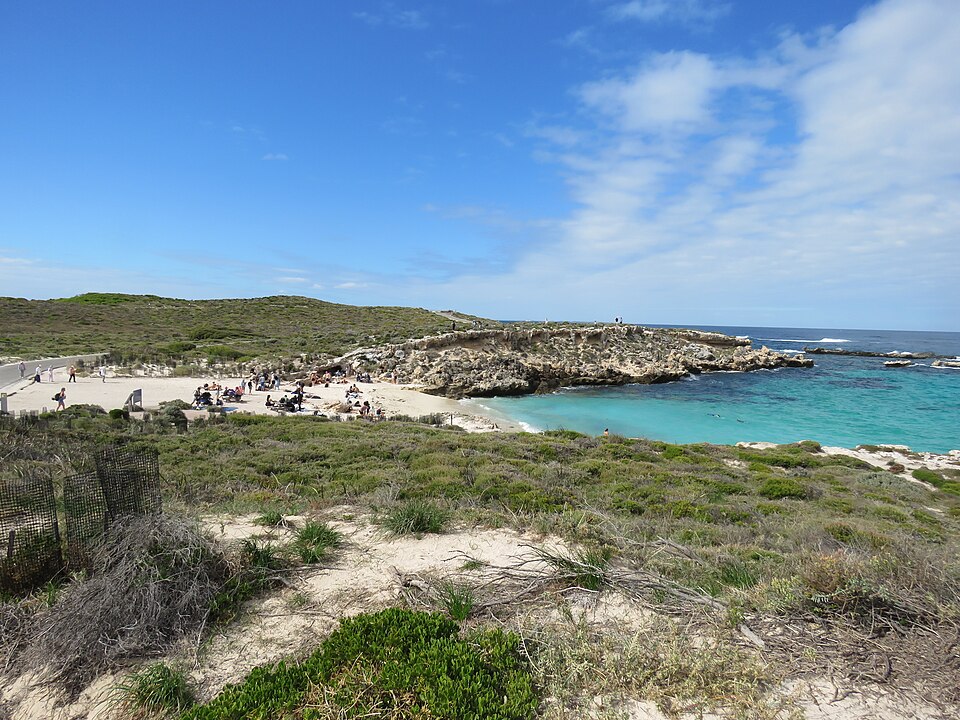
Little Salmon Bay on Wadjemup / Rottnest Island (2026).Photo: Calistemon. Wikimedia Commons file · CC BY-SA 4.0. Responsive sizes supplied by Wikimedia Commons.
Three useful starting points
At Mettam’s Pool, reef shelters a natural swimming area near West Coast Drive. DBCA describes marine plants and animals close to shore. It is a sensible place to assess visibility and comfort, but “sheltered” does not mean safe in every swell. Read our Mettam’s Pool guide for the beach approach.
The Coogee Maritime Trail starts at the Omeo wreck, about 25 metres from shore at North Coogee. The City says the wider underwater trail reaches seven metres at its deepest; most of it lies around 2.5 to five metres. Stay on the shallower part if that suits your ability. The wreck is fragile: do not stand on it, touch it or remove anything. Fishing and boating are prohibited in the trail area. This is distinct from the main Coogee Beach swimming area, so put the wreck or Socrates Parade into your directions.
On Rottnest, the island authority marks a Little Salmon Bay snorkel trail, a loop of about 700 metres, and describes reef life at Parker Point. A calm-looking photo does not predict that afternoon’s wind. Little Salmon Bay sits in a sanctuary zone with no fishing; leave shells, coral and sea life where they are.
Make a short swim your first plan
Bring a well-fitting mask and a buddy. DBCA’s water-safety guidance says not to snorkel alone. Identify a simple entry and exit before going in, and turn back while you still have energy. Rock shelves, boat traffic and deeper sections change the demands of a swim. Children need close adult supervision in the water, even at a sheltered beach.
Check a current weather forecast, beach signs and SharkSmart WA alerts on the day. If the water is murky, the wind is rising or you cannot confidently return to shore, save the snorkel for another day. A shore walk can still be a good outing. For a broader wildlife trip, see our Shoalwater Islands Marine Park guide.