

A short stroll, a loop or a picnic
- For a quick walk, start at the Scenic Drive car park and follow the lakeside path. Turn back at a bench or continue to the boardwalk and gazebo.
- For a relaxed circuit, allow about 20 to 30 minutes if you want to stop by the water. Choose the shorter inner loop if you’re walking with young children or pushing a pram.
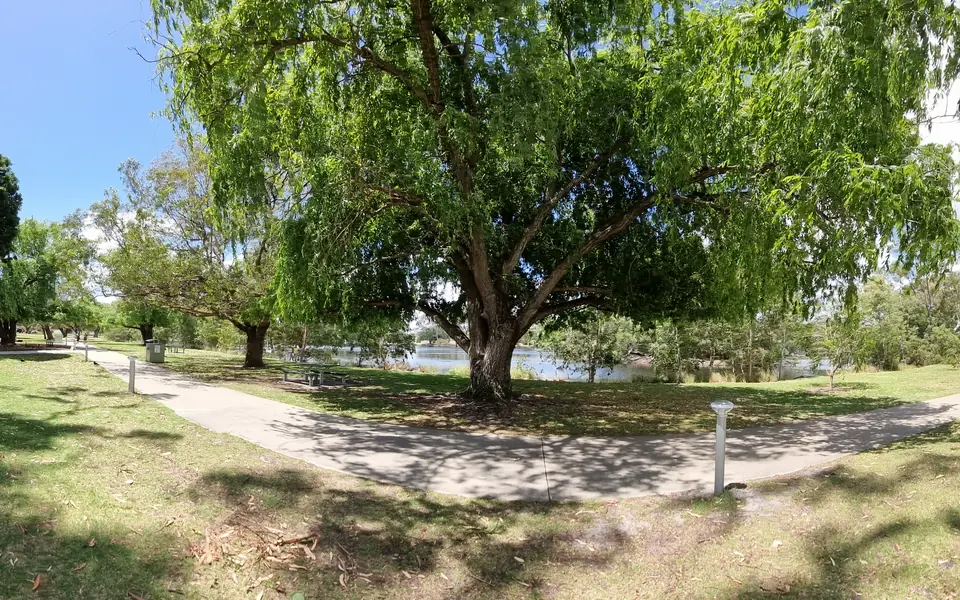
- For a picnic, bring a rug for the lawn or use a shaded table. Choose Scenic Drive for a picnic near the café, or President Street for a barbecue and playground.
Walking loops and the boardwalk
The City of Belmont’s trail map shows two easy, flat circuits. Allow about 12 minutes for the 1 km inner loop and 17 minutes for the 1.5 km outer loop, plus any stops. The City’s reserve listing also gives a general trail distance of 1.6 km. Use the distances marked on the map when choosing between the two circuits.
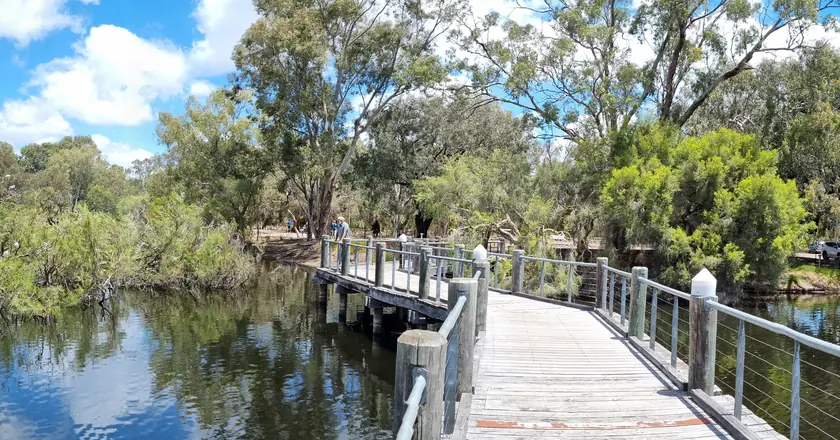
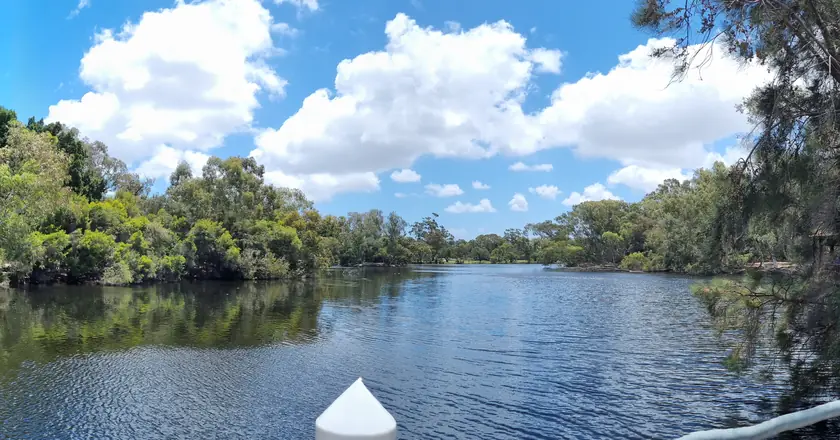
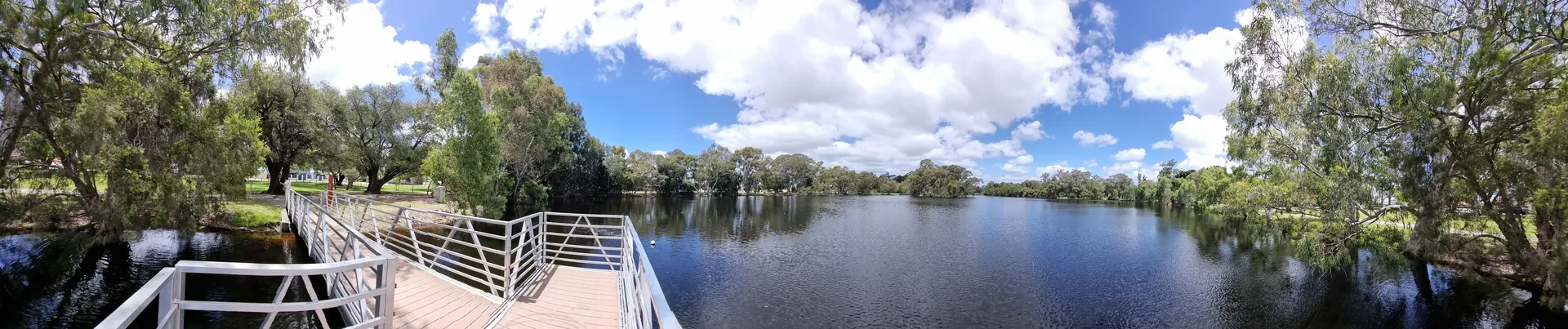
Follow the boardwalk out over the water for a closer view of the wetland and its vegetated island.
The paved perimeter path is shared with cyclists. The City has installed solar lighting along the lakeside path. For a bushland detour, the City’s Nature Passport directs visitors to the Jida Bidi interpretive trail at the end of Scenic Drive.
Birdwatching at the lake
Stop at the gazebo to watch for ducks, ibis and swans. Scan the open water, then look along the branches and vegetation at the water’s edge. Stay on the boardwalk or lakeside path and give the birds room.

Tomato Lake panorama

Playground, picnics and access
The reserve has picnic tables, barbecues, public toilets and a drinking fountain. At the playground there is a rope climbing net, and the adjoining grass gives children space to play. For a short family visit, pair the playground with a walk to the gazebo.
Nature Play WA lists accessible parking, paths, toilets and play equipment, including an accessible swing. The council describes the walking circuits as flat. If you bring a dog, keep it on a leash and under control.
Getting to Tomato Lake
The reserve’s street address is 34 Oats Street, Kewdale, in the City of Belmont. The council map shows parking at the end of Scenic Drive on the west side and off President Street on the east side. It marks toilets on both sides of the reserve.
For public transport, enter 34 Oats Street, Kewdale, in Transperth’s JourneyPlanner and compare the final walk from the suggested stops.
By bike, the Surrey Road Bike Boulevard connects Cohn Street through the reserve to President Street and on to Jeffery Street. There’s a bike repair station at the President Street end of the connecting path.
- Open a larger map of Perth with the reserve marked
- Transperth JourneyPlanner
- City of Belmont bike route
Why it’s called Tomato Lake
Tomato Lake is on Whadjuk Noongar Country. In the City of Belmont’s First Nations Strategy, Noongar Elder Dr Noel Nannup describes the Belmont area as part of the territory of the Beeloo people and the local waterways, including Tomato Lake, as places for hunting and fishing.
The wetland was later known as Smith’s Swamp and then Craig’s Swamp. Poultry farmer Stephen Craig started growing maize there in 1910. By 1913 he was growing tomatoes for his chickens and selling the surplus at market. The crop gave the lake its present name.
From 1945, children from South Belmont State School, now Kewdale Primary School, came here on nature study excursions. The school visits helped draw attention to the wetland’s value for wildlife.
Work to improve the lake began in 1971 after a campaign supported by local pharmacist Don Tyler, who was elected to the council on the issue. When the floating weed salvinia spread across the water, residents helped the council clear it. Belmont Museum dates the official change to the name Tomato Lake to the mid-1970s. A wildlife observatory was built in 1975.
In 1982 the council began a larger redevelopment and extended the lake towards President Street. Water quality monitoring began in 1998, and the council trialled new aeration systems between 2003 and 2005. Later improvements added paths, seating, signs and the boardwalk visitors use today.
- City of Belmont First Nations Strategy (PDF)
- Tomato Lake heritage record
- Belmont Museum history of Tomato Lake (PDF)
- WA water management case study (PDF)
Keep planning
Share this page
Tomato Lake Reserve